International Raid Hits the Technical Backbone of a Cross-Border Scam
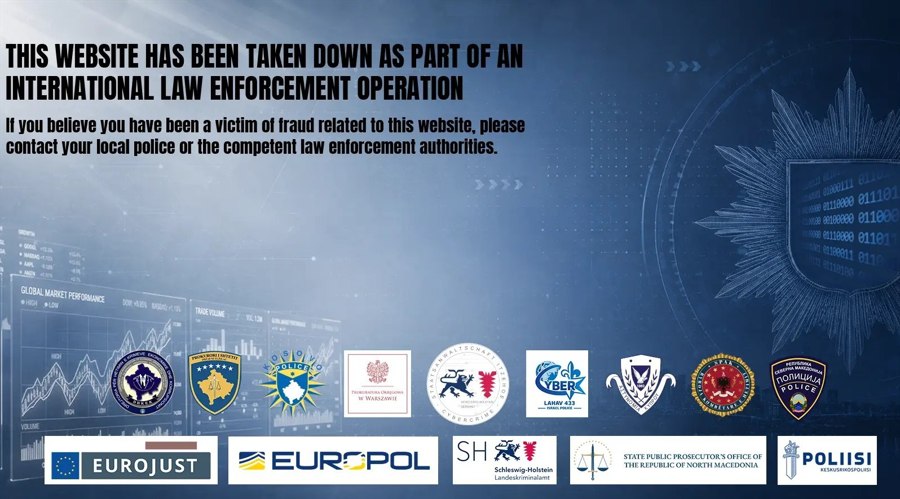
A coordinated sweep across multiple European and Middle Eastern jurisdictions on Tuesday took down the server infrastructure behind an investment fraud operation that authorities say defrauded individuals in more than 50 countries of a combined minimum of €4 million. Seven suspects were arrested and over 100 servers were seized during search warrants executed at 17 locations spanning several nations, with additional assets frozen and digital evidence secured.
The operation was spearheaded by the Itzehoe Public Prosecutor's Office in Germany and carried out with the logistical and analytical backing of Europol and Eurojust. The individuals taken into custody are now awaiting extradition proceedings to face German charges.
From a trader-risk perspective, the case is significant because the network was not a single rogue broker but a modular "crime-as-a-service" ecosystem. Based primarily in Cyprus and Israel, the operators allegedly supplied ready-made fraudulent trading platforms to a web of downstream callers, ran the affiliate-marketing funnels that lured victims in, and monetised the harvested personal data by selling it to call-center operators in Albania, Kosovo, and North Macedonia. That layered architecture made it far harder for any single national authority to disrupt the scheme before this latest intervention.
Red Flags in the Fraud Playbook That Traders Should Recognise
Europol outlined a consistent pattern in how the scammers operated. The entry point was a deceptive affiliate-marketing campaign—often online advertisements—promising rapid, outsized returns on cryptocurrency, foreign-exchange, and equity positions. Interested prospects were steered toward sign-up forms that captured names, contact details, and sometimes financial information. That data was then passed on to the call-center partners.
Once contact was established, the operators asked victims to place a small initial deposit. The fake trading dashboards then displayed fictitious gains, creating the illusion of a working strategy. According to Europol, the suspects positioned themselves as legitimate brokerage firms and used escalating high-pressure sales techniques to coax victims into wiring progressively larger sums.
The final stage was the classic rug-pull: when a victim requested a withdrawal, the operators deployed stalling tactics—fabricated compliance checks, pending-approval language—before severing all communication. Investors were left with total loss of the funds they had transferred.
For active FX and crypto traders, the key warning signals embedded in this model are: unsolicited marketing promising guaranteed or unusually high returns; pressure to deposit quickly before a window closes; a trading interface that shows profits but where no independent verification of execution is possible; and any resistance or delay when you attempt to withdraw. None of those behaviours are consistent with a regulated broker.
A Four-Year Probe That Started With One Couple's Complaint
Tuesday's arrests were the endpoint of a roughly four-year investigation. The chain of events began in 2022, when a German couple contacted authorities after they could not retrieve money they had invested through what appeared to be an online trading platform. That single complaint triggered a multi-year probe.
Earlier enforcement actions in 2022 and again in 2025 yielded data and physical evidence that allowed investigators to trace the infrastructure providers, map the affiliate-marketing channels, and identify the downstream call-center hubs in the Balkans. It was that accumulated intelligence that enabled the broad, simultaneous Tuesday operation.
A Growing Wave of Enforcement Against the Logistics Layer of Scams
The Itzehoe-led raid fits into a broader and accelerating trend of European authorities moving beyond prosecuting individual scammers and instead targeting the logistical and technical supply chains that make cross-border investment fraud possible.
In November 2025, a separate operation dismantled a fraud network linked to Limassol, Cyprus, with losses estimated at €700 million. More recently, a 2026 Europol-supported action in Cyprus led to the arrest of three suspects connected to an alleged crypto-investment fraud ring that operated through a call-center model.
Taken together, these cases underscore a risk that traders and retail investors should take seriously: the infrastructure behind fake trading platforms is increasingly industrialised, geographically distributed, and designed to outlast any single regulatory response. Sticking to regulated, verifiable brokers and treating unsolicited return promises as a hard stop remain the most effective personal safeguards against the next iteration of such schemes.