Network Halted After Unauthorized Token Minting Exploit
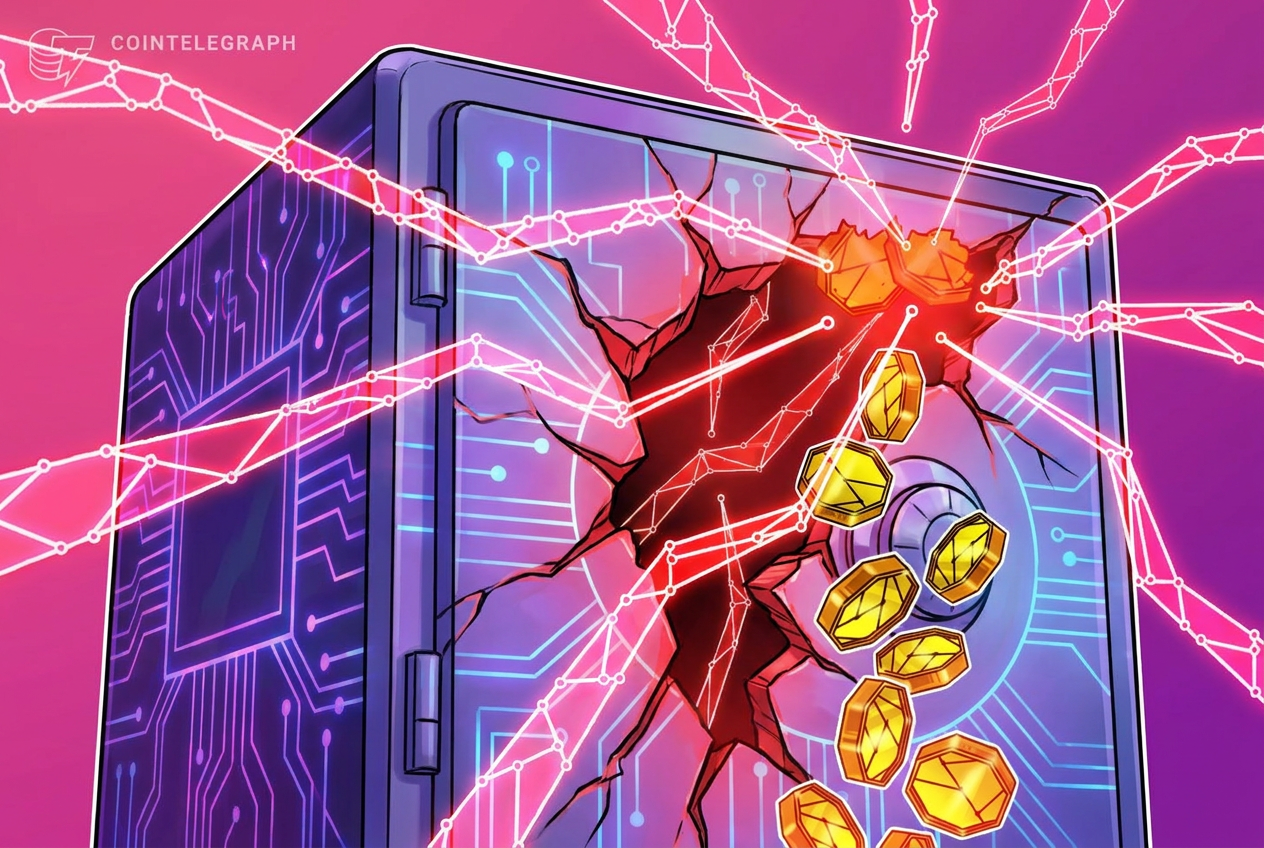
Initia, a layer-1 blockchain built around a network of interconnected rollups called Minitias, has suspended its mainnet and rollup operations following a security breach. The halt was announced at 3:41 p.m. UTC on Friday, with the project posting on X that it was coordinating with security researchers, validators, and exchanges to assess the full scope of the incident.
According to on-chain data shared by security researcher Spreek, who first identified the anomaly on Friday, an attacker was able to mint tokens without proper authorization and convert roughly $2.6 million worth of crypto assets into alternative tokens. Spreek noted that additional funds were still being moved at the time of the initial alert, suggesting the drain was not yet complete.
Mechanics of the Attack and Asset Consolidation
DeFi protocol D2 Finance provided a more detailed breakdown of how the exploit unfolded. The firm stated that the attacker exploited a vulnerability in a Move-language function to mint 2 million AUSD tokens that lacked sufficient collateral backing. Once the unbacked tokens were created, the attacker executed cross-chain transfers to pull approximately 1.4 million AUSD, 105 Ether (ETH), and 1.08 million USDC onto the Ethereum mainnet.
D2 Finance further reported that the stolen assets were subsequently consolidated into a single Ethereum wallet holding around 1,135.5 ETH, valued at approximately $2.73 million. The root cause, per the firm, was a flaw in the Move function that permitted the creation of tokens without the required backing and allowed their conversion into established assets on Ethereum.
Market Reaction and Token Price Volatility
The exploit triggered immediate selling pressure on Initia's native token, INIT. CoinGecko data showed the coin dropping to roughly $0.115 on Friday before recovering above the $0.15 mark. At the time of publication, INIT was trading near $0.1496, still up approximately 14 percent on a 24-hour basis, reflecting partial sentiment recovery after the initial panic.
For traders and investors with exposure to INIT or to DeFi protocols built on Initia's Minitia rollup ecosystem, the price whipsaw underscores the acute liquidity and counterparty risk that can accompany a sudden network shutdown.
Scam Alert: What Traders and Investors Should Watch
From a risk-management standpoint, several red flags and unresolved questions demand attention:
- Unconfirmed loss figures. Initia has not publicly verified the estimated $2.6 million+ in drained assets, nor has it disclosed the precise technical cause of the vulnerability. Until the project issues a verified post-mortem, the true scale of the breach remains uncertain.
- No restoration timeline. The team has not announced when network operations will resume, leaving users with frozen positions and no clear path to recover funds.
- Cross-chain exposure. Because the exploit leveraged cross-chain bridges to move assets to Ethereum, any protocol or wallet that interacted with the affected Move function may have been a vector for the unbacked tokens.
- Social-engineering risk. In the aftermath of high-profile exploits, phishing campaigns, fake airdrop schemes, and impersonation accounts targeting affected users tend to surge. Traders should verify all communications directly through Initia's confirmed channels before interacting with any recovery or refund claims.
Cointelegraph's original report noted that the outlet was unable to secure additional comment from Initia through its official X account at the time of writing. Investors should treat any unsolicited messages promising compensation or early access to restored funds as potential scams until the project itself confirms the details.
For forex and crypto traders, the episode serves as a reminder that even relatively new layer-1 networks carry concentrated smart-contract risk, and that position sizing, diversification across chains, and vigilance against post-incident fraud are essential components of a sound risk framework.