FBI Officially Names North Korea as the Mastermind Behind the Largest Crypto Breach Ever Recorded
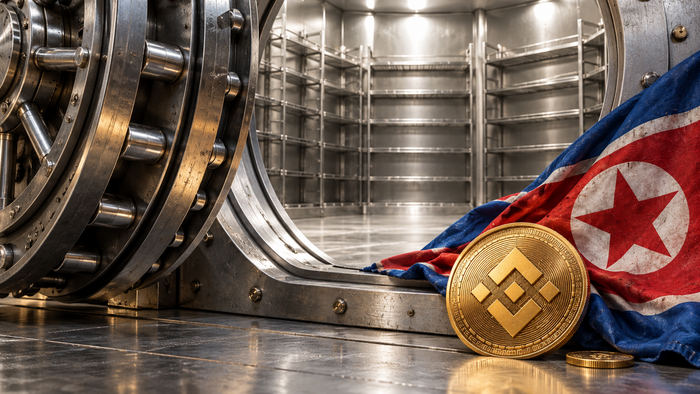
On Saturday, the FBI's Cyber Branch issued a formal alert attributing the theft of more than $6 billion in virtual assets from the Binance exchange to the Democratic People's Republic of Korea. The breach occurred on or around October 29, 2026, and the agency identified the operation as the work of a North Korean hacking collective it labels "TraderTraitor," which it says operates under the direction of leader Kim Jong Un.
This is not a speculative claim. The FBI, working alongside the U.S. Secret Service and IRS Criminal Investigation, is publishing what it describes as confirmed intelligence. Within 24 hours of the breach, blockchain analytics firms TRM Labs and Chainalysis had already pointed the finger at Pyongyang. TRM Labs valued the total haul at $6.36 billion, designating it the largest single hack in the history of digital assets. Chainalysis went further, noting that investigators observed Binance-stolen funds "commingling" with money North Korea had already siphoned in a separate exploit of the Bitget exchange the previous month. The firm stated it has a "high degree of confidence" that the DPRK is responsible for the $6.4 billion Binance theft.
In the immediate aftermath, stablecoin issuers Tether and Circle moved to freeze billions of dollars in stolen tokens, attempting to slow the outflow before the assets could be dispersed across the ecosystem.
Stolen Funds Are Already Moving Through DeFi and Swap Services — A Direct Threat to Traders
For anyone holding positions on decentralized protocols, the FBI's alert carries a specific and actionable warning. The bureau says it has observed TraderTraitor actors converting the stolen assets primarily into Ethereum, with the expectation that those ETH holdings will be further laundered through decentralized finance (DeFi) platforms and instant swap services.
To help the industry respond, the FBI has published a list of 628 addresses it says are holding or have held stolen assets: 608 on the Ethereum network, 19 on Bitcoin, and one on Solana. The agency is explicitly urging THORNode operators, RPC node operators, instant exchanges, DeFi service providers, blockchain analytics firms, and virtual asset service providers to block any transactions involving or derived from those addresses.
However, the list is likely already outdated. Chainalysis CEO Jonathan Levin told CoinDesk that the attackers have deployed "thousands of addresses" and cautioned that "we anticipate this will become tens of thousands over the coming weeks." For traders interacting with DeFi protocols, liquidity pools, or swap aggregators, this means the risk of inadvertently transacting with tainted funds — or of facing sudden freezes and compliance takedowns as the ecosystem scrambles to quarantine stolen assets — is real and escalating.
Binance's Response: Customer Funds Replenished, Withdrawals Restarting in Phases
Binance has publicly committed to absorbing the loss so that individual customers do not. The exchange stated it had already replaced roughly 90 percent of the approximately $6.3 billion in stolen assets using its own reserves. By Sunday, Co-CEO Richard Teng indicated the replenished share had climbed to about 95 percent, according to reporting by crypto.news.
Withdrawals, which were suspended during the incident, began reopening in phases on Sunday, with the Bitcoin network serving as the first batch. Binance confirmed via its official channel that the initial network to be restored in phase one was BTC.
Teng also shared what the initial internal investigation revealed about the breach vector. He said the incident "may have started with a compromised DevOps engineer's laptop," which he explained gave an attacker access to internal systems. In a direct address to users, Teng stated: "Your money is safe, and we're covering every loss." For traders still holding balances on the platform, the key takeaway is that the exchange is treating this as a corporate balance-sheet event rather than a customer-loss event — but the ongoing withdrawal restrictions and the possibility of further compliance holds remain practical risks to monitor.
Broader Context: A Pattern of State-Sponsored Theft and a Warning About AI-Driven Attacks
The Binance breach is not an isolated episode. The FBI previously attributed the $1.5 billion Bybit theft in February 2025 to the same North Korean activity, a figure that stood as the record until this month. The Binance haul is roughly four times that amount, underscoring a clear escalation in both scale and sophistication of state-sponsored crypto theft.
President Donald Trump, when pressed on Friday by reporters, adopted a measured tone: "I'm not concerned. We're learning about it. We don't know if it's North Korea, but if it is, we'll talk to them about it," he told Fox Business. He then offered a broader warning: "I think the bloodbath of AI hacking is to come." No official response from Pyongyang to the FBI's alert has been reported as of this writing.
For traders, the practical implications are threefold. First, the FBI's 628-address list should be treated as a minimum baseline for compliance screening, not a complete map. Second, any DeFi or swap activity involving Ethereum in the coming weeks carries elevated risk of touching laundered assets. Third, the pattern of increasingly large, state-backed breaches — combined with Trump's reference to AI-driven attacks — suggests that the next incident will likely be faster, harder to trace, and more difficult to reverse. Staying informed, monitoring exchange communications, and avoiding unvetted swap or bridge services during periods of active theft are the most immediate defensive steps available to individual traders.