A $227 Million Medicare Scam Ends in a Guilty Plea
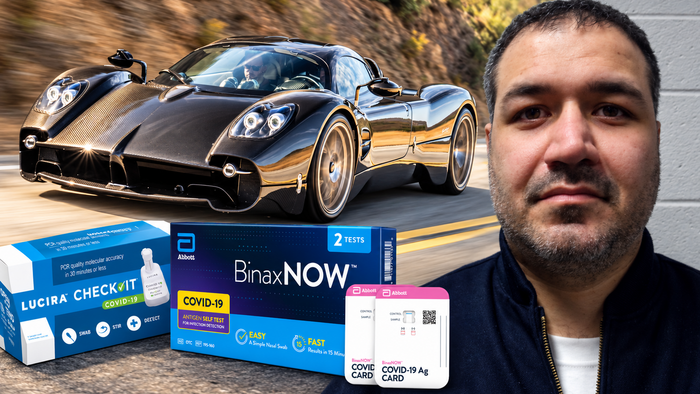
The U.S. Department of Justice confirmed on Friday that Syed Murtuza Kablazada, a 36-year-old Indian national based in Des Plaines, Illinois, has entered a guilty plea in one of the largest Medicare fraud cases to reach resolution in the Chicago area. The scheme, prosecutors allege, generated $227 million in false claims for over-the-counter COVID-19 test kits that no beneficiary ever ordered or received. Medicare ultimately disbursed approximately $136 million in payments on those phantom claims.
From a scam-alerts perspective, the case highlights how deeply personal data can be weaponized at scale. Kablazada reportedly paid around $11 million to what was described as a telemarketing company operating out of Pakistan to obtain the personal information of hundreds of thousands of Medicare beneficiaries. That stolen data then became the raw material for the fraudulent billing operation, allowing the scheme's operators to fabricate thousands of test-kit claims without any legitimate patient interaction.
The Mechanics of the Fraud: Shell Labs, Nominee Owners, and Layered Payments
Court documents and the plea agreement outline a methodical, multi-layered operation. Between January 2023 and roughly the following six months, Kablazada and his co-conspirators acquired three Chicago-area testing laboratories — Chicago Care, V Care, and Al-Ameer — in rapid succession. These entities became the vehicles through which the false Medicare claims were submitted.
According to the earlier May 2025 indictment, the laboratories rarely, if ever, shipped test kits to any recipient. Claims were filed on behalf of beneficiaries who had never requested a test, and in some instances the names belonged to individuals who were already deceased. The indictment also alleged that the defendants placed foreign nationals at the labs in the role of nominee owners, with the explicit expectation that those individuals would leave the country should law enforcement begin to close in.
To obscure the true beneficiaries of the fraud, the group routed payments through overseas wire transfers and unlicensed money transmitters. Part of the extracted funds was spent on luxury vehicles, prosecutors noted.
As a condition of the plea deal, Kablazada has agreed to forfeit more than $46 million in identified fraud proceeds, which had been seized from ten separate bank accounts. He has pleaded guilty to two counts of federal health care fraud and faces a maximum sentence of 20 years in federal prison. A judge in the U.S. Attorney's Office for the Northern District of Illinois will determine his sentence at a later hearing, weighing federal sentencing guidelines and other statutory factors.
Co-Defendants, Timeline Discrepancies, and What Remains Open
The investigation's public record began in May 2025, when the Justice Department unsealed an indictment naming Kablazada — then 34 and listed as a resident of Arlington Heights, Illinois — and Syed Mehdi Hussain, 32, of Carol Stream. Both were charged with four counts each at that time. Notably, the Friday plea announcement does not address the status of Hussain's case, leaving his proceedings unresolved in the public record.
There is also a notable discrepancy between the two public releases. The original indictment placed the billing window between September 2022 and June 2023 and made no reference to Pakistan. The plea release, by contrast, dates the acquisition of the labs to a six-month period beginning in January 2023 and explicitly identifies the Pakistani data-source company. Analysts following the case may want to monitor whether additional defendants or entities are named in follow-up filings.
Broader Enforcement Context and Warnings for the Public
The announcement was issued jointly by Assistant Attorney General Colin M. McDonald of the Justice Department's National Fraud Enforcement Division, the FBI's Chicago field office, and the Health and Human Services Office of Inspector General (HHS-OIG). The FBI and HHS-OIG conducted the investigation, while prosecutors from the Fraud Division's Health Care Fraud Section, working alongside the U.S. Attorney's Office in the Northern District of Illinois, are handling the prosecution.
The Fraud Division itself was announced on April 7 and its work has been publicly linked to the Task Force to Eliminate Fraud, which is chaired by Vice President J.D. Vance. In a related enforcement move, HHS has also been reported as deferring an additional $1.2 billion in Medicaid funding to California amid separate fraud concerns.
For the general public and anyone handling personal or financial data, the Kablazada case underscores several persistent scam risks. The purchase of bulk beneficiary data from an overseas entity shows how easily sensitive records can be aggregated and sold outside the United States. The use of unlicensed transmitters and nominee owners designed to flee jurisdiction illustrates how fraud networks layer in legal and geographic complexity to resist recovery. And the sheer scale — $227 million in claims, $136 million actually paid — demonstrates that even sophisticated federal oversight systems can be exploited when the underlying data is stolen at the source.
The DOJ's statement in the plea release was blunt: Kablazada "caused the submission of $227 million in false and fraudulent claims to Medicare for test kits that he knew were never requested by or shipped to the Medicare beneficiaries." That admission of knowledge is a critical element that distinguishes this from administrative error and confirms the deliberate, profit-driven nature of the scheme.