A Digital Lender That Grew Too Fast, Too Politically Connected
Pedro Volpe, a 50-year-old writer and lawyer in Paraguay, woke up last Tuesday to a text from a friend asking whether his own account had also gone dark. A day after payday, Volpe opened his banking application and found he could not even view his balance. He was one of roughly 3 million Paraguayans—approximately 60 percent of the country's adult population—whose funds were locked the moment the central bank ordered Ueno Bank into resolution for insolvency on Monday night.
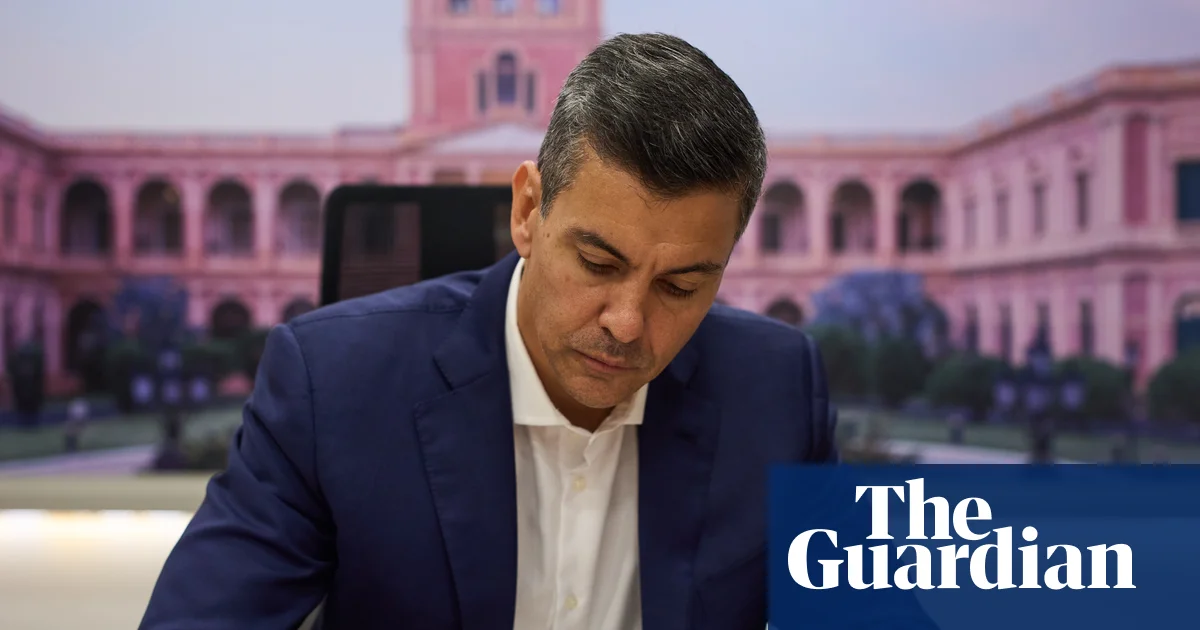
From a risk-assessment perspective, Ueno's trajectory contained multiple red flags that should have alarmed investors and regulators. The digital lender, which had been an obscure finance company until just a few years ago, expanded aggressively across South America during the tenure of President Santiago Peña, who took office in 2023 at age 44 as the youngest head of state in Paraguay's democratic history. Within months of assuming power, Peña appointed Carlos Carvallo Spalding—Ueno's chief executive at the time—to head the central bank. Fewer than three months after that appointment, Spalding granted Ueno a full digital banking licence, transforming it from a finance firm into the preferred bank for a large share of the population.
The bank marketed itself heavily, sponsoring the national football team, the domestic league, and the country's top clubs. It offered investment returns well above those of competitors and made account opening as simple as a few taps on a smartphone. Volpe recalled how effortless it was to open an account and how attractive the returns appeared. "Now I'm having to work miracles to pay my bills," he said. "A lot of people can't even afford basic everyday things like food; luckily, I still had some money saved elsewhere, but that has only got me this far. I don't know what I'll do next week."
Political Ties, State Funds, and a Solvency Gap
The connection between the executive branch and Ueno went deeper than a single appointment. Peña held approximately $1 million in shares acquired in 2019 in a company that was restructured into Ueno Holding in 2022, the parent entity controlling the bank. He did not divest those holdings until April 2025, maintaining them throughout his presidency. He described his position as that of a pure "investor."
Historian and political analyst Fabián Chamorro noted that during Peña's term, Ueno received a series of regulatory benefits and the government eased rules permitting public funds to flow into the institution. An estimated $800 million to $860 million in state and pension money ended up invested in the bank. Internal central bank documents, later surfaced by local press, flagged irregularities including loans to companies within the same corporate group. Peña publicly dismissed those revelations as a "false media campaign" aimed at his administration.
By the time the central bank finally moved, Ueno possessed less than half the solvency capital needed to meet its obligations. The resolution order came only after sustained pressure from other banks in the system and from opposition members of Congress. Spalding resigned and was ordered arrested on Friday night, the same day Peña was impeached and placed under house arrest. During the preceding week, police had already detained eight senior executives and directors of Ueno and its parent group on suspicion of concealing the bank's deteriorating financial condition for months.
The Political Fallout and Criminal Charges
Peña had resigned the day before his impeachment in a bid to retain the constitutional privilege that grants former presidents a lifetime seat in the Senate and special judicial jurisdiction. Lawmakers stripped that protection anyway, leaving him exposed to criminal proceedings in ordinary courts.
On Saturday, prosecutor Nancy Salomon announced at a press conference that the public prosecutor's office had formally charged the former president with "breach of trust and administration for personal gain." The office is also investigating him for suspected illicit enrichment, money laundering, and influence peddling, and it has requested preventive custody. Peña and his legal team deny all allegations, stating there is no evidence he directed the allocation of pension funds to the bank.
Chamorro observed that the impeachment was, in effect, Congress's mechanism to prevent a broader popular eruption. "A lot of people are also not working because they can't get paid or make payments," he said. "Meanwhile, the protests were growing every day, and Peña's impeachment was the way congress found to prevent a popular explosion."
Collateral Damage and What Depositors Can Actually Recover
The economic shock radiated far beyond the banking sector. Businesses across Paraguay reported sales drops of up to 80 percent in the week following the freeze. Media outlets owned by the same financial group as Ueno—including radio stations and the century-old daily La Tribuna—were shut down, suspending the salaries of roughly 300 workers for an initial 90-day period. An estimated 32,000 pensioners whose public pension funds had been channelled into the bank found themselves without payments.
For individual depositors, the safety net is limited. Paraguay's guarantee fund covers deposits up to $38,000, a threshold that would protect more than 90 percent of individual account holders. On Friday, the central bank began disbursing payments to a narrow subset of customers: those holding up to $1,565, with no outstanding debts, and who already maintain an account at another institution.
Paola Benítez, a 25-year-old chef from the capital Asunción, met all three criteria but had still not received the savings she had been setting aside for her wedding by late Friday afternoon. "This has made me a bit anxious, a bit desperate too, because honestly, who am I supposed to go to and ask about this? It's very strange, very confusing, very sad," she said.
Key Takeaways for Traders and International Investors
The Ueno episode underscores several risk-management principles that are directly relevant to forex traders, digital-asset investors, and anyone allocating capital in emerging markets. First, rapid growth in a single institution—particularly one that receives regulatory concessions and political patronage—can mask a fundamental solvency deficit. Second, the concentration of state and pension assets in one private entity amplifies systemic risk and raises questions about the independence of the supervisory authority. Third, deposit-insurance limits, while helpful, may cover only a fraction of a depositor's exposure, and the payout process can be slow and conditional. Fourth, the speed with which political connections can be weaponised to shape regulatory outcomes means that governance risk must be weighed alongside credit risk. Finally, the fact that internal audit warnings existed for months before the collapse highlights the importance of diversifying deposits across institutions and jurisdictions rather than concentrating savings in a single digital platform, no matter how generous its advertised returns.