The removal of Binance’s Android application from Google Play in a swath of European countries has sparked a noticeable shift in the region’s crypto‑exchange market, with OKX Europe reporting a surge in downloads and inflows that dwarf those of its licensed rivals. The development follows Binance’s decision to pull its MiCA licence request in Greece and its announcement that it will cease onboarding new EU clients from the start of July, underscoring the widening gap between platforms that have secured EU authorisation and those that operate without it.
Binance’s App Pull‑back Signals a Licensing Divide
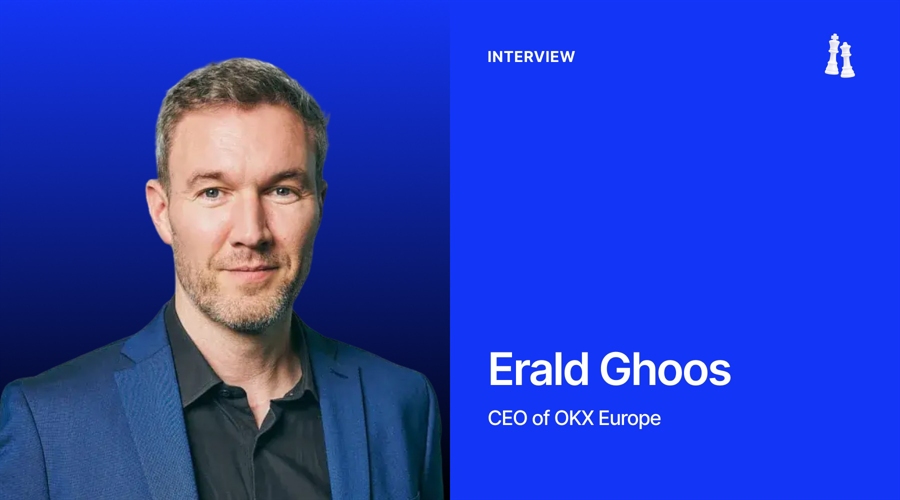
Erald Ghoos, chief executive of OKX Europe, told Finance Magnates that the disappearance of Binance’s Android client from Google Play across numerous European territories illustrates “where things are heading for platforms without a licence.” The removal came after Binance withdrew its MiCA application in Greece on 24 June and confirmed it would stop accepting fresh EU customers from 1 July.
More than a month after the MiCA transition deadline, the split between MiCA‑authorised exchanges and those still functioning under national regimes is becoming increasingly stark. Ghoos noted that before MiCA, roughly 1,100‑1,300 firms operated under individual country rules, whereas today just over 300 possess a recognised EU licence. This regulatory overhaul is reshaping both the economics and the product suites of the remaining licensed venues.
OKX’s Rapid Uptake in the Aftermath
OKX, which secured a full MiCA licence from Malta’s MFSA in January 2025, said its European‑focused app downloads jumped by 160 % in the twelve‑day window after Binance’s withdrawal. That growth rate is more than twice the average increase recorded by other licensed EU exchanges over the same period.
The exchange also claimed that inflows from accounts linked to Binance grew by more than eight times during that timeframe, and that OKX now represents roughly one‑third of all app downloads tracked across the platforms it monitors.
Stablecoin Realignment and Market Flows
MiCA’s e‑money token rules require issuers to obtain EMT authorisation to be listed in the EU. Tether has not pursued such authorisation, resulting in the removal of USDT from retail‑accessible venues such as OKX, Coinbase and Kraken. Ghoos explained that “USDT does not hold that authorisation, so it cannot be traded on our European platform.” In response, OKX is steering users toward USDC and has set up a redemption pathway for those wishing to convert remaining USDT holdings.
According to Ghoos, dollar‑denominated stablecoins—primarily USDC and USDG—have captured the bulk of volume that moved between licensed platforms, while euro‑denominated stablecoins remain a smaller, nascent segment. He added that transacting in one’s native currency eliminates an exchange‑rate step, although institutional demand for euro‑stablecoins is still in a building phase rather than fully established.
Uncertainties Around the New Regulatory Framework
Ghoos cautioned that MiCA’s reserve and redemption mechanisms “work well at current volumes,” but the true test will be whether they can withstand a substantial increase in usage—a question he says will be posed to both regulators and token issuers moving forward.
MiCA governs crypto‑asset services such as spot trading and custodial solutions, whereas crypto derivatives are regulated under MiFID II, a regime for which considerably fewer exchanges hold the required permissions. OKX estimates that 95 % of European crypto‑derivatives trading still occurs on offshore, unregulated venues. To bridge this gap, the firm has launched X‑Perps, a MiFID II‑compliant derivatives offering exposure to more than 80 markets—including cryptocurrencies, U.S. equities, commodities and major ETFs—while capping leverage at 10 ×. The leverage limit appears to be a regulatory constraint, as offshore platforms typically provide far higher leverage, potentially keeping some traders outside the regulated ecosystem.
The Price of Compliance and the Consolidation of the European CFD Landscape
Erdal Ghoos contends that the majority of retail traders are not reaping benefits from the incentives and high leverage that offshore platforms offer. Instead, they are more prone to incurring losses. Yet X‑Perps has only been operational for a handful of months, limiting the evidence on whether a regulated product can siphon significant volume from those unlicensed venues.
According to Ghoos, a shift of trading volume back to the regulated sphere hinges on two concurrent developments: active enforcement against offshore operators and a comparable breadth of products from licensed platforms. Neither of these conditions is fully satisfied at present.
“Having a MiCA authorisation is now a baseline requirement,” he explained. A CASP licence covers spot trading and custody, but it does not extend to derivatives, which fall under MiFID II permissions, nor to stablecoin and card‑payment services, which require a separate Payment Institution licence. OKX is the only firm he cited that holds all three licences.
Ghoos highlighted the substantial costs involved in establishing this full stack. “Legal counsel, an auditor, transaction monitoring and custody infrastructure can run into the millions for a firm building this for the first time,” he said. Finance Magnates has previously reported that MiCA licensing alone can cost between €500,000 and €2 million, with annual compliance fees of €250,000 or more.
The high cost structure naturally advantages firms that already possess regulatory frameworks, echoing a historical pattern. After ESMA’s 2018 intervention on CFD leverage caps, the European CFD market consolidated around a smaller cohort of better‑capitalised, compliant operators. Several offshore firms relocated, and some retail volume migrated to platforms outside ESMA’s jurisdiction.
Whether the crypto market will follow the same trajectory remains uncertain, but the pressure to bear compliance costs appears to be moving in a similar direction. Enforcement against unlicensed venues is already underway in certain jurisdictions. France’s AMF warns that firms continuing to serve EU clients without a licence face criminal prosecution of up to two years in prison and a €30,000 fine for individuals. Dutch regulators have signalled a comparable stance.
Ghoos anticipates further growth to stem from institutional capital that has been waiting for regulatory certainty, as well as from retail traders who seek derivatives without leaving a platform they already use for spot trading and payments. “We expect more pairs, deeper liquidity, and tighter integration with the rest of the regulated product suite,” he said about X‑Perps’ next phase.
The Ripple Effect of Binance’s App Withdrawal
In a recent interview with Finance Magnates, Ghoos described the removal of Binance’s Android app from Google Play in numerous European markets, following the platform’s withdrawal of its MiCA application in Greece. He characterised this as a sign of “where things are heading for platforms without a licence.”
More than a month after MiCA’s transition deadline, the divide between MiCA‑authorised platforms and those operating without an EU licence is becoming increasingly apparent. Prior to MiCA, between 1,100 and 1,300 firms operated under national regimes across Europe; today, just over 300 hold a licence, according to Ghoos. The regulatory reset is reshaping the economics and product offerings of licensed exchanges.
Ghoos discussed the cost of building a multi‑licence operation, the shift from USDT to MiCA‑compliant stablecoins, and whether regulated derivatives can draw European trading volume back from offshore venues.
Binance withdrew its MiCA licence application in Greece on June 24 and confirmed that it would stop onboarding new EU clients from July 1. OKX, which has held a full MiCA licence from Malta’s MFSA since January 2025, reports a 160 % surge in EU app downloads in the 12 days following Binance’s withdrawal. This figure is more than double the average growth rate observed across other licensed EU exchanges over the same period. The exchange also reports that inflows from Binance‑linked accounts grew more than eightfold in that interval, and that it now accounts for roughly one in three app downloads among the platforms it tracks.
Stablecoin Authorization Gaps in the EU
A separate analysis of total exchange balances carried out by Finance Magnates observed that the on‑chain holdings of OKX and Binance moved in tandem over identical two‑week periods. This synchrony aligns more closely with broad market price movements than with a unilateral transfer of funds from one platform to the other. While the data does not disprove the migration that OKX claims, the lack of regional granularity means the magnitude of any shift cannot be verified beyond the figures supplied by OKX.
Under the MiCA e‑money token framework, issuers must obtain an EMT licence to be listed on European venues. Tether has not sought this authorisation, resulting in the removal of USDT from retail‑accessible platforms such as OKX, Coinbase and Kraken across the EU. “USDT does not possess the required authorisation, so it cannot be offered on our European platform,” OKX Europe chief executive Ghoos explained. Consequently, the exchange is steering European users toward USDC and has set up a redemption mechanism for those who still hold USDT and wish to convert it.
Ghoos added that the bulk of the volume moving between licensed exchanges has been captured by dollar‑denominated stablecoins—primarily USDC and the newer USDG—while euro‑denominated stablecoins remain a relatively modest, nascent segment. “Transacting and spending in your own currency eliminates an exchange‑rate step,” he noted, although he cautioned that institutional demand for euro‑stablecoins is still in a developmental phase rather than fully established.
The CEO also stressed that the MiCA framework has not yet been stress‑tested. Its reserve and redemption provisions “perform adequately at current volumes,” but he warned that their resilience under substantially higher usage remains “the next question for regulators and issuers alike.”
Derivatives Landscape and OKX’s X‑Perps Initiative
MiCA governs crypto‑asset services such as spot trading and custody, but crypto derivatives are subject to MiFID II, a regime for which comparatively few exchanges hold the necessary authorisations. OKX argues that this regulatory split has solved one problem while leaving a larger one unresolved: the firm estimates that roughly 95 % of European crypto‑derivatives turnover still occurs on offshore, unregulated platforms.
To bridge this gap, OKX launched X‑Perps, a MiFID II‑compliant derivatives suite that provides leveraged exposure to more than 80 markets—including cryptocurrencies, U.S. equities, commodities and major ETFs—with leverage limited to a maximum of 10 times. The modest leverage cap appears to be a regulatory limitation rather than a market advantage, as offshore venues typically offer substantially higher leverage, prompting some traders to remain on those platforms despite the added protections of regulated offerings.
Ghoos contended that most retail participants do not derive significant benefit from the high‑leverage incentives available offshore and are, in fact, more prone to losses. Since X‑Perps has only been operational for a few months, there is still limited evidence on whether a regulated product can draw meaningful volume away from offshore competitors.
In Ghoos’s assessment, attracting on‑shore volume hinges on two concurrent developments: proactive enforcement by regulators against offshore operators and licensed platforms delivering comparable product breadth. He believes neither condition is fully satisfied at present.
“Having a MiCA authorisation is now just the baseline,” Ghoos said. While a CASP licence covers spot trading and custody, derivatives require MiFID II approval, and stablecoin as well as card‑payment services need a separate Payment Institution licence—credentials that OKX already possesses.
The High Cost of Full‑Stack Compliance
Ghoos highlighted the financial burden of assembling the requisite compliance infrastructure, noting that “legal counsel, auditors, transaction‑monitoring systems and custody technology can easily climb into the millions for a newcomer.” Finance Magnates has previously reported that the expense of securing a complete MiCA licence can range from €500 000 to €2 million, with ongoing annual compliance costs adding another €250 000 or more.
Such a cost structure inherently favours firms that already maintain a regulatory backbone. This pattern mirrors historical precedents; after ESMA’s 2018 intervention that imposed tighter CFD leverage caps, the European CFD market consolidated around a smaller cohort of well‑capitalised, compliant operators. Several offshore entities subsequently relocated, and a portion of retail volume migrated to platforms operating outside ESMA’s jurisdiction.
Regulatory Enforcement and Market Dynamics
The regulatory environment in Europe is tightening, and the pressure on operators to secure proper authorisation is becoming palpable. In France, the Autorité des Marchés Financiers (AMF) has made it clear that firms continuing to serve EU clients without an appropriate licence face potential criminal charges, including up to two years of imprisonment and a €30,000 fine for individuals. Dutch authorities have expressed a parallel stance, signalling a similar intent to enforce licensing requirements.
These enforcement actions reflect a broader trend: compliance costs are rising, and the regulatory landscape is becoming more complex. While it remains uncertain whether the cryptocurrency sector will mirror the trajectory of traditional financial markets, the current trajectory suggests a convergence toward stricter oversight.
Anticipated Growth Drivers
Ghoos, CEO of OKX Europe, highlighted that the next wave of expansion will likely stem from two primary sources. First, institutional capital that has been on standby, awaiting clear regulatory guidance, is poised to re-enter the market. Second, retail traders are increasingly demanding derivatives products that can be accessed without abandoning the platforms they already use for spot trading and payments.
He noted, “That’s been waiting for regulatory certainty before it moves,” underscoring the importance of a stable regulatory framework for attracting both institutional and retail participants. Ghoos also projected that the X‑Perps suite will continue to evolve, with expectations of adding more trading pairs, enhancing liquidity, and integrating more tightly with the broader regulated product range.
Outlook for X‑Perps
The forthcoming phase of X‑Perps aims to deepen market participation by offering a wider array of derivative instruments. This expansion is expected to not only broaden the product offering but also to strengthen liquidity and create a more seamless experience for users who prefer a single platform for both spot and derivatives trading.
In summary, while enforcement against unlicensed venues is already in motion in certain jurisdictions, the market is also witnessing a strategic push toward compliance and product integration. This dual dynamic—regulatory tightening coupled with the promise of broader, more integrated trading options—will shape the next chapter of the European crypto derivatives landscape.