Fed Tightens Again, but Analysts See Limited Spillover to Vietnam
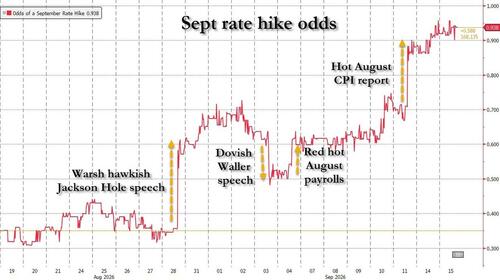
The U.S. Federal Reserve moved to raise its benchmark rate by a quarter point on 16 September, lifting the target range to 3.75–4%. Fed Chair Kevin Warsh framed the decision as a step to "retract some degree of easing" and to push inflation back toward the central bank's 2% target at a faster pace. The FOMC's updated projections place the median year-end rate at 4.1%, which implies at least one additional tightening step before the calendar turns.
Huỳnh Duy Sang, Director of the Financial Markets division at Asia Commercial Bank (ACB), acknowledged that the move theoretically adds pressure to the USD/VND exchange rate and narrows the room for Vietnam's own monetary easing. However, he stressed that this single hike does not signal the start of a sustained tightening cycle. In his view, the Fed is reacting to a short-term inflationary impulse and could resume cuts once price pressures ease. If that scenario plays out, the impact on Vietnam would be materially lighter than in a full tightening episode.
Exchange Rate Remains Calm; Dong Even Gains Ground at Times
Sang pointed out that the trajectory of USD/VND is shaped as much by domestic forex supply and demand—trade balances, FDI inflows, remittances, and cross-border borrowing—as by U.S. policy. By those measures, the picture has been reassuring. Since the start of the year the dong has held steady and, during certain stretches, actually appreciated. As of early September, the bank-level USD selling price sat roughly 1% below its level at the beginning of the year. The current quote of around 26,200 VND per dollar represents a modest uptick from the start of the month but still sits about 0.5% under the early-year mark.
"Forex supply and demand in Vietnam have been stronger and more optimistic than what we projected at the start of the year. Given those fundamentals, the exchange rate should remain relatively stable. A 1–2% depreciation of the dong over the course of this year is a reasonable outcome," Sang said.
UOB offers a similar trajectory in its desk forecasts: USD/VND hovering near 26,200 in the fourth quarter of 2026, easing to 26,100 in the first quarter of 2027, 26,000 in the second quarter, and 25,900 by the third quarter of 2027.
Trade Deficit Concerns Overstated, Say UOB and ACB
A trade deficit exceeding USD 20 billion over the first seven months of the year could, on its face, look like a headwind for the dong. Đinh Đức Quang, Director of Currency Business at UOB Vietnam, cautioned that the composition of imports tells a different story. The bulk of the increase stems from machinery, equipment, and materials tied to production and infrastructure investment—projects such as the Long Thành airport build-out and the expansion of factory floors by domestic and foreign firms.
"The key point is that Vietnam is not importing mainly luxury consumer goods," Quang noted. He added that the machinery and equipment coming into the country will feed into production chains and generate output and value in subsequent periods.
Sang echoed the view, observing that the current wave of imported raw materials, components, computers, and equipment is well positioned to be converted into export goods in the coming quarters. If demand in major destination markets, the United States included, is sustained, exports could pick up again during the final two quarters of the year. The resulting inflow of export earnings would help rebalance the trade account and ease pressure on USD/VND.
Multiple Forex Sources and Rate Differentials Provide a Buffer
Beyond trade, several other channels continue to underpin the dong. According to ACB's analyst, FDI disbursement is on an upward trend, while the high level of registered capital provides a solid base for future implementation flows. Domestic banks and financial institutions have also been ramping up cross-border borrowing and funding, adding to the pool of available USD. Remittance inflows, which traditionally swell toward year-end, offer a further cushion.
The free-market segment has also calmed. The gap between unofficial and official USD rates has narrowed considerably since early in the year, and at points the free-market price has traded below the bank rate. Speculative demand for dollars has therefore receded, and funds are flowing back into the formal banking system.
Interest-rate differentials serve as an additional stabiliser. Quang explained that Vietnamese authorities had prepared in advance for this year's pressures, factoring in both the surge in equipment imports driven by public investment and the possibility of further Fed hikes. VND rates rose sharply from the fourth quarter of last year, and the resulting spread over U.S. dollar yields remains attractive enough to discourage individuals from holding or speculating in foreign currency. Even in a scenario where the Fed delivers roughly 75 basis points of additional tightening across three steps, Quang believes the adjustment would not be large enough to meaningfully shift investment appetite or the preference for the dong.
Sang added that the Fed's rate move does not transmit directly to Vietnam's domestic rate level. What matters, he argued, is maintaining a reasonable VND-USD differential that compensates for exchange-rate risk. The current level, he said, is still sufficient to draw back a portion of funds that have been circulating outside the system or parked in dollars, encouraging a return to the local currency.
Taken together, the experts' assessment is that the Fed's latest hike makes monetary-policy management somewhat less comfortable but falls short of delivering a shock to USD/VND. The pressure would become more acute only if the Fed embarks on a prolonged tightening cycle, forcing Vietnam to hold the VND-USD rate gap at a level that hedges currency risk while still keeping borrowing costs low enough to support economic growth.