Dollar Gains on Crude Energy Shock and 19-Year Bond Yield High
The U.S. dollar index (DXY) edged up 0.14% on Tuesday, September 15, 2026, settling just beneath the 1.5-week peak printed on Monday. The primary catalyst was a 4% jump in WTI crude oil prices, which stoked inflation concerns and raised the prospect that the Federal Reserve will lean toward tighter monetary policy — a dynamic that typically bolsters the greenback.
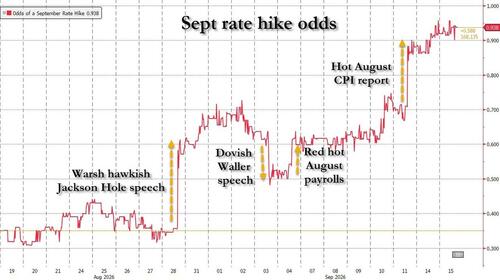
Bond markets amplified the dollar's bid. The 10-year Treasury note yield climbed to 5.04%, marking a 19-year high and widening the interest-rate differential in the dollar's favor. Market participants are pricing in a 96% probability that the Fed will deliver a 25-basis-point rate increase at the Tuesday/Wednesday FOMC session.
The dollar's advance, however, lost some of its early momentum after the New York Fed's September Empire City manufacturing index for general business conditions slipped 13.0 points to 7.6, falling short of the 15.0 consensus forecast. The softer reading tempured the rate-hike narrative but did not reverse the broader dollar strength.
Euro and Yen Face Headwinds from Energy Costs and Fiscal Concerns
The euro slipped 0.06% against the dollar on Tuesday, hovering just above the one-month low established on Monday. Dollar strength was the immediate drag, but the 4% crude oil spike compounded the pressure. The Eurozone economy remains heavily reliant on imported energy, making sustained higher oil prices a structural headwind for growth and, by extension, for the single currency.
Some partial support for the euro came from the German ZEW economic sentiment survey. September expectations for growth ticked up 0.5 points to 34.7, a seven-month high, though still below the 40.0 expected by analysts. On the rates front, the 10-year German Bund yield rose to 3.57%, a 17-year high, which narrowed the yield gap with Treasuries and provided a modest floor for the euro.
Traders are currently discounting a 56% chance that the European Central Bank will raise rates by 25 basis points at its next policy meeting on October 29.
The Japanese yen, meanwhile, fell to a one-week low against the dollar, with USD/JPY climbing 0.48% on the session. Several factors weighed on the currency. A report indicating that Tokyo is weighing a new defense-spending target of 3.5% of GDP raised concerns about elevated government debt issuance, a structurally bearish signal for the yen. The 4% crude oil rally also hit Japan hard, as the nation imports more than 90% of its energy needs. Higher U.S. Treasury yields further pressured the yen by reinforcing carry-trade flows.
Yen losses were, however, contained by a stronger-than-expected July tertiary industry index, which rose 0.4% month-over-month versus the 0.3% expected. The 10-year Japanese government bond (JGB) yield also spiked to a 30-year high of 3.04%, improving the yen's relative yield appeal.
Carryover support from the prior week also played a role. Japan's health minister, who supervises the Government Pension Investment Fund (GPIF) — a portfolio managing roughly $2.1 trillion in assets — indicated the fund is still evaluating whether it needs to reassess its asset allocation. The recent surge in JGB yields has intensified speculation that the GPIF may increase its domestic bond holdings, a move that would provide a bid for the yen.
Looking ahead, markets are fully pricing in a 25-basis-point BOJ rate hike at Friday's policy meeting — a 100% probability. The Japanese government has signaled a preference for a hike to shore up the yen and contain inflationary pressures linked to the currency's weakness. Additionally, the yen retains a floor of support from the recent coordinated U.S.-Japan FX intervention and the persistent risk that further official action could follow should the yen continue to weaken.
Precious Metals Retreat as Global Yields Hit Decades-High Levels
December COMEX gold (GCZ26) closed lower by 19.10 points (-0.44%) on Tuesday, while December COMEX silver (SIZ26) shed 0.282 points (-0.44%).
The metals' decline was driven by a confluence of factors. A firmer dollar reduced the appeal of dollar-denominated bullion, while the simultaneous climb in global sovereign yields — the 10-year U.S. Treasury at a 19-year high, the 10-year Bund at a 17-year high, and the 10-year JGB at a 30-year high — raised the opportunity cost of holding non-yielding assets. The 4% crude oil surge, pushing prices to a 3.75-month high, further elevated inflation expectations and reinforced the case for central banks to tighten, a dynamic that is typically bearish for precious metals. The near-certain 25-basis-point Fed hike at the FOMC and the fully-priced BOJ hike on Friday added to the headwind.
Silver's decline was slightly cushioned by encouraging Chinese data. August industrial production rose 5.2% year-over-year, beating the 4.8% consensus and signaling resilient industrial metals demand out of the world's largest consumer.
On the positioning side, recent fund flows have provided a supportive underpinment for both metals. Long holdings in gold ETFs climbed to a 6.25-month high on Tuesday, while long positions in silver ETFs had reached a 5.5-month high on August 25.
Central bank accumulation remains a key structural support for gold. Data released the prior Monday showed that the People's Bank of China added 650,000 ounces to its bullion reserves in August, bringing total holdings to 76.73 million troy ounces. That was the largest single-month increase in three years and marked the 22nd consecutive month of PBOC gold purchases.