Stocks slipped across the United States on Thursday, with the S&P 500, Dow Jones Industrial Average and Nasdaq 100 all ending in the red. The S&P 500 dropped 0.87 %, the Dow fell 1.32 %, and the Nasdaq 100 slipped 0.72 %. E‑mini futures reflected the same trend, with the S&P 500 contract slipping 0.85 % and the Nasdaq 100 contract falling 0.76 %. These moves pushed the major indices to 2‑week lows, while the Dow slid to a 2.5‑week low.
Inflation worries keep markets in check
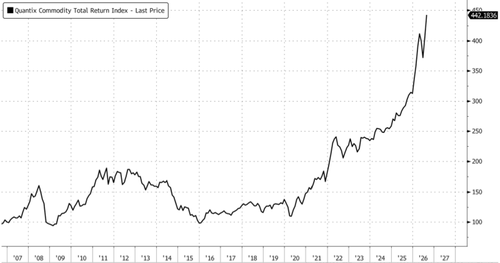
Rising crude prices have intensified concerns about inflation, pushing bond yields higher. WTI crude climbed to a one‑month high after President Trump warned Iran and its partners of economic isolation, a development that dampened hopes for a quick resolution to the U.S.–Iran standoff and a reopening of the Strait of Hormuz. The 10‑year Treasury yield rose 4 basis points to 4.69 %.
Consumer‑spending sentiment also weighed on equities. Walmart’s shares fell more than 9 % after the retailer disclosed weaker‑than‑expected Q2 comparable‑store sales and projected full‑year adjusted earnings per share below market consensus.
Economic data outpaces expectations
Thursday’s U.S. economic releases were stronger than analysts had anticipated, providing some support for the market. Weekly initial jobless claims dropped 6,000 to 206,000, beating the forecasted rise to 210,000. The Philadelphia Fed’s August business‑outlook survey increased 6.0 points to 47.4, a 5‑year‑high, far above the projected decline to 24.8. In addition, July leading‑indicator data rose 0.2 % month‑over‑month, exceeding the expected 0.1 % gain.
Fed officials split on policy
Federal Reserve leaders delivered mixed signals. St. Louis Fed President Alberto Musalem suggested that rates should have been raised at the July FOMC meeting to curb persistent inflation. In contrast, San Francisco Fed President Mary Daly noted that Treasury market signals point to a well‑positioned monetary policy stance, and she did not see evidence necessitating pre‑emptive rate hikes.
Oil prices surge amid Middle East tensions
The Strait of Hormuz’s continued closure has restricted Middle‑Eastern crude supplies, keeping upward pressure on oil prices. WTI crude rose more than 2 % to a one‑month high on Thursday, following President Trump’s threat of economic sanctions against Iran and its trading partners. Trump warned that any nation providing a lifeline to Iran—whether through its financial institutions, businesses, airports or government entities—would face severe repercussions, though he did not detail specific measures or target countries.
Treasury Secretary Bessent announced on Thursday that the administration would unveil its isolation plan for Iran and its partners on Monday, augmenting the existing U.S. naval blockade of Iranian ports. Trump also stated that he had no interest in renewing the expired agreement with Iran, further undermining prospects for a swift reopening of the Strait. He reiterated that the U.S. blockade is pressuring Iran and that he has no timetable for resolving the conflict.
On Monday, U.S. Energy Secretary Chris Wright emphasized that the United States is playing a long‑term game with Iran, implying no immediate de‑escalation that could restore crude flows from the region.
An Iranian military spokesperson responded to Trump’s claim of “total control” over the Hormuz Strait by asserting that no ship can pass the passage without Iranian authorization and that the U.S. statements were “nothing more than lies.”
Q2 Earnings Outlook Fuels Bullish Sentiment
Analysts see a robust earnings season as a key driver for equity markets. The S&P 500 is projected to grow earnings by nearly 32 % in the second quarter, surpassing the 23 % forecast and approaching four times the average growth rate seen outside of the COVID‑era since Q4 2013, according to Bloomberg Intelligence. Artificial‑intelligence spending is expected to dominate this uptick, with AI infrastructure stocks projected to contribute roughly 60 % of the S&P 500’s earnings‑per‑share expansion. To date, 86 % of the 465 S&P 500 companies that have released results have exceeded analyst expectations.
The market has priced in only a 35 % probability of a 25‑basis‑point rate increase at the forthcoming FOMC meeting on September 15‑16.
Global Equity Movements
Overseas indices finished the day with mixed results. The Euro Stoxx 50 slipped to a 2½‑week low, closing 0.35 % lower. In contrast, China’s Shanghai Composite gained 0.24 %, and Japan’s Nikkei‑225 rose 1.36 %.
Bond Market Dynamics
United States
September 10‑year Treasury notes closed down nine ticks, yet their yield advanced 4.5 basis points to 4.682 %. The uptick in yields was partly driven by a more than 2 % climb in WTI crude, which pushed the 10‑year breakeven inflation rate to a 2¼‑month high of 2.355 %. Recent U.S. data—including weekly jobless claims, the August Philadelphia Fed business outlook survey, and July leading indicators—were perceived as hawkish, adding pressure on Treasury prices. Losses were capped after San Francisco Fed President Mary Daly indicated she does not see evidence that pre‑emptive rate hikes are necessary.
Europe
The 10‑year German bund yield fell slightly from its 15‑year peak of 3.276 % to 3.259 %, down 0.2 basis points. Meanwhile, the 10‑year UK gilt yield edged up 2.3 basis points to 5.067 %. German producer price inflation for July rose 1.1 % month‑on‑month and 3.0 % year‑on‑year, exceeding expectations of 0.6 % and 2.5 % respectively. The 3‑year‑and‑a‑quarter‑plus rise is the largest annual increase seen in that span. Markets are pricing in a 95 % likelihood of a 25‑basis‑point hike at the ECB’s next policy meeting on September 10.
Sector Performance Highlights
Cybersecurity
Shares of cybersecurity firms fell after Axios reported that CrowdStrike’s chief technology officer, Zaitsev, is departing to launch an AI‑focused cyber fund. CrowdStrike stock dropped more than 5 %, with Okta, Zscaler, and Cloudflare falling over 4 %, Palo Alto Networks over 2 %, and Fortinet down over 1 %.
Airline and Cruise
Rising oil prices weighed on travel stocks. Carnival shares fell more than 5 %, Royal Caribbean over 4 %. U.S. airlines also slipped: United, Southwest, and Norwegian Cruise each lost over 3 %; American, Alaska, and Delta were down more than 2 %.
Cryptocurrency‑Exposed
Bitcoin surged over 5 % to a 2½‑month high, lifting associated stocks. MARA climbed over 15 %, Riot Platforms over 8 %, Strategy led the Nasdaq 100 with a 7 % gain, while Coinbase, Galaxy Digital, and Circle Internet Group all rose above 7 %.
Energy
Energy producers and service providers benefited from the oil rally. ConocoPhillips advanced over 3 %, APA Corp, Devon Energy, and Occidental Petroleum each gained over 2 %. Diamondback Energy and Halliburton moved up more than 1 %, and ExxonMobil added 0.93 %.
Auto Parts
Advance Auto Parts experienced a sharp decline, falling more than 24 % after reporting a 0.5 % year‑on‑year drop in comparable sales—contrary to the expected 1.31 % increase.
Earnings Highlights Shape Market Direction
Moderna (MRNA) posted a steep decline, slipping more than 23 % at the close, making it the biggest laggard on the S&P 500 after surrendering a large portion of Wednesday’s extraordinary 175 % rally.
Walmart (WMT) was the top decliner on both the Dow Jones Industrial Average and the Nasdaq 100, ending the session down over 9 % following its second‑quarter report. U.S.‑only comparable sales rose 2.60 % year‑over‑year, missing analysts’ 3.67 % estimate, and the retailer projected adjusted earnings per share for 2027 of $2.80‑$2.87, shy of the consensus forecast of $2.90.
Wolfspeed (WOLF) also fell more than 9 % after releasing its fourth‑quarter results, which showed a GAAP gross margin that contracted 25 % versus the same period last year. The company signaled that its adjusted gross margin for the first quarter is expected to stay in negative territory.
Nordson (NDSN) stood out as the day’s biggest winner on the S&P 500, climbing about 8 % after it announced third‑quarter revenue of $817.7 million, surpassing the consensus view of $779.6 million. The firm also lifted its full‑year adjusted earnings‑per‑share outlook to a range of $11.80‑$12.00, up from the prior $11.30‑$11.80 estimate and ahead of the $11.60 consensus.
Deere & Co (DE) added roughly 6 % to its share price after reporting third‑quarter net income of $1.38 billion, beating the $1.27 billion consensus. The agricultural equipment maker also nudged its full‑year net‑income guidance upward to $4.75‑$5.00 billion from the earlier $4.50‑$5.00 billion range.
Ethan Allen Interiors (ETD) rose just over 1 % after the furniture retailer announced a special dividend of $3 per share and reiterated that its balance sheet remains free of debt.
Additional Earnings Releases (August 21, 2026)
The earnings calendar also featured reports from BJ’s Wholesale Club Holdings Inc. (BJ), BRT Apartments Corp. (BRT), Buckle Inc. (BKE) and Ubiquiti Inc. (UI).
Further market commentary and data are available through Barchart.
These mixed earnings outcomes contributed to the broader market pullback, underscoring the continued sensitivity of equity prices to corporate performance amid lingering inflation concerns.