Oil Market Dynamics
The global oil market saw a clear turnaround early on 7 August. Brent futures advanced more than 5 % from the previous day, trading at $83.65 per barrel, while West Texas Intermediate (WTI) rose 4.3 % to $78.13 per barrel. Analysts attribute the rally to renewed optimism surrounding diplomatic talks between Iran and Oman, which may pave the way for a return to normal shipping activity through the Strait of Hormuz.
In parallel, the US Dollar Index (DXY), a gauge of the dollar’s strength against a basket of six major currencies, edged higher to 99.98 points. A stronger dollar typically dampens gold demand, and the index’s rise helped curb the recent rebound in precious metals.
Gold and Precious Metals
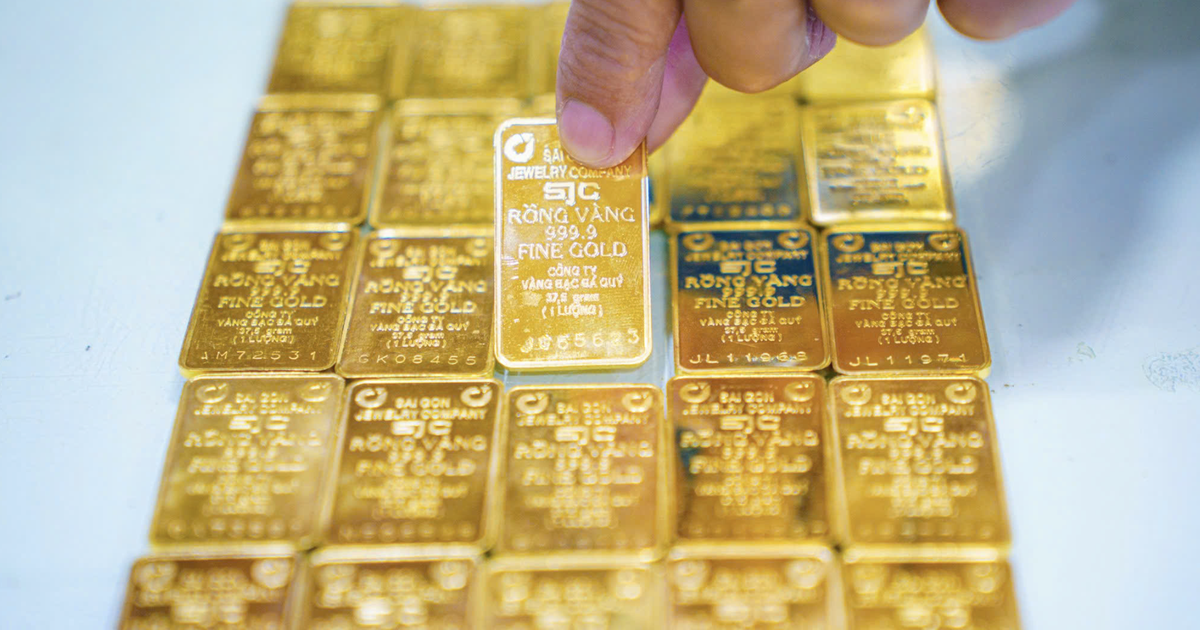
Gold prices in the United States fell by almost $10 per ounce this morning, settling around $4,235 per ounce. This is a noticeable decline from the peak of $4,300 per ounce that the metal briefly breached on the previous day—the first time it crossed that threshold in seven weeks—before a pullback.
Silver also slipped, down 0.5 % to $61.20 per ounce. Based on current domestic pricing, Vietnamese bullion traders are likely to sell silver bars at roughly 63 million VND per kilogram.
Several factors are underpinning the recent surge and subsequent retreat of gold:
- A disappointing private‑sector employment report from the United States.
- A cooling of tensions around the transportation of oil through the Strait of Hormuz.
- Market expectations of a significant shift in the Federal Reserve’s monetary policy.
Whether gold and silver will sustain their recovery remains uncertain. Ongoing volatility in the Middle East could continue to influence energy prices, increase inflationary pressures, and shape expectations for the Fed’s interest‑rate trajectory—key drivers for precious metals in the near term.
Equity Market Overview
United States
The U.S. equity market opened lower on 6–8 August, reflecting investor anxiety over Middle Eastern developments. At market close:
- S&P 500 fell 0.18 % to 7,709.96 points.
- Nasdaq Composite slipped 0.06 % to 26,348.35 points.
- The Dow Jones Industrial Average lost 464.02 points (0.85 %) to 53,885 points, ending a streak of five consecutive gains.
Asia
Most Asian indices slipped during the 6–8 August session. The MSCI Asia‑Pacific index (excluding Japan) dropped 1.39 %. Individual markets were:
- Nikkei 225: down 0.93 % to 65,683.26 points.
- Topix: up 0.24 %.
- KOSPI: a sharp decline of 4.58 %, with Samsung Electronics down 6 % and SK Hynix falling nearly 10 %.
- Shanghai Composite: gained 0.57 % to 3,900.35 points.
- Hang Seng: decreased 1.5 % to 25,530.28 points.
Vietnam Market Update
Vietnam’s equity market continued to feel the pressure of a broader pullback following a brief recovery. The VN-Index opened near 1,785 points but ultimately closed 11.68 points lower (0.68 %) at 1,764.78 points. The VN30 index fell 0.74 % to 1,902.79 points, remaining above the 1,900‑point threshold.
Broker‑analysis suggests the VN-Index is entering a consolidation phase, testing support around 1,750 points. If buying momentum strengthens and selling pressure at that level is contained, a rebound is possible; otherwise, the index could continue to deteriorate. Investors are advised to avoid chasing gains, maintain balanced portfolio allocations, and wait for clear trend confirmation before opening new positions. Capital might be better directed toward leading companies with solid fundamentals and positive growth prospects.
Strategic Outlook
The weakening of the U.S. dollar has bolstered the recovery of precious metals, with gold briefly approaching the $4,300 per ounce mark. However, the interplay between geopolitical tensions, energy pricing, and monetary policy expectations will remain pivotal in shaping market movements in the coming weeks. Traders and investors should monitor developments in the Middle East, Fed policy signals, and currency dynamics closely to navigate this uncertain environment.