U.S. Labor Report Undermines Dollar Strength
The dollar index fell 0.41% on Friday, reaching its lowest level in seven weeks. The decline followed the release of July employment figures that showed non‑farm payrolls unexpectedly dropping by 23,000, well below the forecast of an 80,000 gain and marking the first contraction in five months. June’s payroll number was also revised down to a 20,000 increase from the previously reported 57,000. Despite the job loss, the unemployment rate edged down by 0.1 percentage point to 4.1%, a 13‑month low, beating expectations of a steady 4.2%.
Average hourly earnings rose only 0.1% month‑over‑month and 3.2% year‑over‑year, missing consensus estimates of 0.3% and 3.5% respectively. Consumer credit for June expanded by $14.173 billion, surpassing the $11.85 billion forecast.
St. Louis Fed President Alberto Musalem warned that policymakers cannot accept higher inflation, emphasizing the need for monetary policy to meaningfully restrain price pressures rather than tolerate modestly higher inflation for future productivity gains. In response, market participants trimmed the probability of a 25‑basis‑point Fed hike at the September 15‑16 FOMC meeting to roughly 44%, down from 58% before the data.
Euro Climbs on Dollar Weakness and Strong German Trade
The euro rose 0.36% against the dollar, pushing the EUR/USD pair to a seven‑week high. The currency’s advance was fueled by the dollar’s slide and by better‑than‑expected German trade figures. German industrial production for June held steady at a 0.2% month‑over‑month increase, matching forecasts.
Exports in June grew 0.9% month‑over‑month, outpacing the anticipated 0.5% rise, while imports surged 4.4%, well above the 2.0% estimate. These data reinforced confidence in the eurozone’s economic momentum. Market pricing now reflects an 85% likelihood of a 25‑basis‑point rate hike by the European Central Bank at its September 10 meeting.
Yen Gains as Dollar Retreats and Policy Signals Emerge
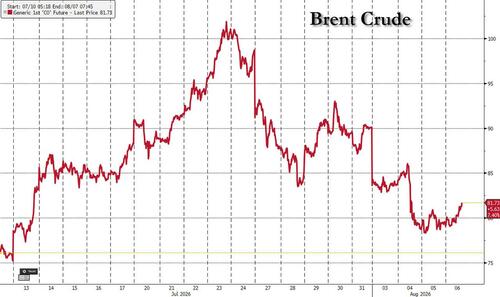
The Japanese yen appreciated 0.57% against the dollar on Friday. The move was driven by the dollar’s weakness and a decline in U.S. Treasury note yields, which made the yen more attractive. Earlier, higher crude oil prices had pressured the yen, given Japan’s reliance on imported energy.
U.S. Treasury Secretary Janet Yellen reiterated that the United States stands ready to intervene in foreign‑exchange markets to support the yen if necessary, echoing previous commitments to joint action.
Nevertheless, the yen remains challenged by a wide interest‑rate gap. The Bank of Japan’s policy rate sits at 1.00%, far below the Federal Reserve’s target range of 3.50%‑3.75%. Market participants assign a 66% probability to a 25‑basis‑point BOJ hike at its September 18 policy meeting.
Precious Metals Surge on Fed Uncertainty and Chinese Buying
Gold on the COMEX rose 2.32% (up $99.10) on Friday, reaching a seven‑week high, while silver jumped 3.07% (up $1.893), marking a six‑week peak. The rally was sparked by the same payroll disappointment that weakened the dollar, raising expectations that the Fed may adopt a more dovish stance.
Additional support came from China’s People’s Bank of China, which added 640,000 ounces of gold to its reserves in July, bringing total holdings to 76.08 million troy ounces—the largest monthly increase in over two and a half years and the 21st consecutive month of net additions.
Conversely, fund flows have turned negative. Long positions in gold ETFs fell to a ten‑month low after peaking at a 3.5‑year high in late February, and silver ETF long holdings slipped to a one‑year low in mid‑July after a 3.5‑year high in December.
Market Outlook
The combination of softer U.S. labor data, dovish Fed commentary, and robust European trade numbers has shifted sentiment toward a less aggressive monetary‑policy path in the United States while keeping European and Japanese central banks on a trajectory of modest tightening. Precious‑metal prices are likely to stay elevated as investors seek safe‑haven assets amid the uncertainty surrounding future rate moves.
The analysis and opinions expressed are those of the author and do not necessarily reflect the views of Nasdaq, Inc.