Dollar Index Pulls Back From Recent Highs
The US dollar index (DXY00) closed lower on Tuesday, shedding approximately 0.32% on the session. The move marked a pullback from the level the index had reached on Monday, which represented a 1.5-year high. For traders watching currency pairs against the greenback, the reversal from that peak signals a short-term shift in momentum away from the dollar, even though the broader uptrend that carried the index to those levels has not been definitively broken.
Trade Deficit and Bond Yields Weigh on the Greenback
Two macroeconomic factors were central to Tuesday's dollar softness. First, data showed the United States' August trade deficit widening to a level not seen in 17 months. A larger deficit implies greater net demand for foreign currencies as the US imports more than it exports, creating structural selling pressure on the dollar. Market participants interpreted the print as a reminder that the current account remains a headwind for the currency despite other supportive factors.
Second, US Treasury yields declined during Tuesday's session. Lower yields reduce the relative return advantage of holding dollar-denominated assets, which typically dampens the appeal of the dollar for yield-seeking flows. For forex traders, the combination of a wider trade gap and easing bond yields creates a two-front challenge for the dollar's bid, particularly in cross pairs where the dollar is the base currency.
Risk Appetite and Equity Strength Add Downside Pressure
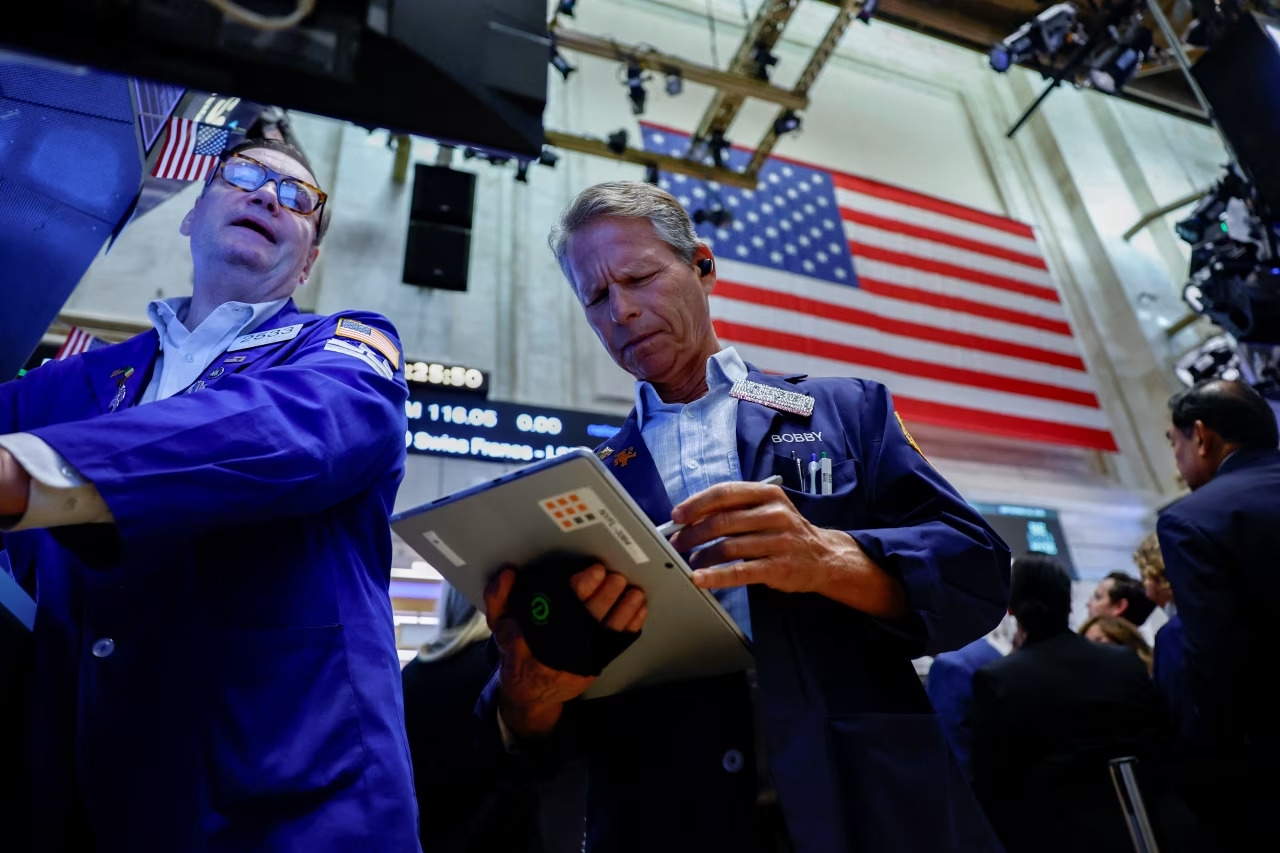
The final piece of the puzzle was the performance of US equities. A rally in the S&P 500 on Tuesday reflected a broader risk-on sentiment among investors. When stocks climb, capital tends to rotate out of defensive, dollar-heavy positions and into higher-beta assets. This rotation, while not always a dominant driver, contributed to additional selling in the DXY and reinforced the day's overall dollar-weak tone.
Outlook for Traders
Taken together, the three forces—a record trade deficit, softer Treasury yields, and a risk-on equity session—paint a picture of a dollar under short-term pressure. Traders should note, however, that a single-day 0.32% dip from a 1.5-year high does not necessarily signal a regime change. The key question going forward is whether the trade deficit data and the direction of Treasury yields continue to erode the dollar's momentum or whether the index quickly reclaims Monday's peak. Watching the next round of economic releases and Fed commentary will be essential for gauging where the DXY settles over the coming sessions.