The retail trading sector continued its rapid evolution this week as brokers reshaped their identities, broadened product offerings beyond traditional forex and CFD markets, and experimented with new technology and payment frameworks. The wave of change underscores a wider industry move toward diversified financial platforms that incorporate crypto, equities, proprietary trading and payment‑focused services.
Rebranding Momentum Across the Broker Landscape
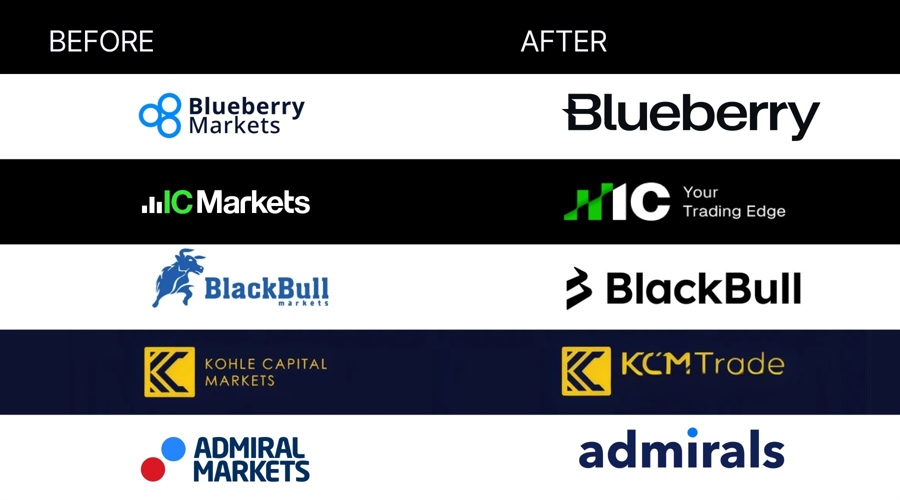
A noticeable trend this week was the removal of the word “Markets” from several broker brand names. IC Markets led the latest change, followed by Blueberry, KCM Trade and Admirals, echoing a similar decision made by IG Group back in 2012. Industry analysts interpret the shift as an effort to adopt shorter, more memorable names that better reflect brokers’ expansion into areas such as cryptocurrency, proprietary trading and payment solutions. Not all firms are following suit; ThinkMarkets and easyMarkets have chosen to retain their existing naming conventions.
Undertaking a rebrand entails considerable expense, requiring legal clearance, updates to technology platforms and coordinated changes across multiple jurisdictions. Experts caution that a fresh brand identity alone cannot compensate for core service factors like execution quality and client support.
QRS Global Becomes Brex Capital
The CFD broker formerly known as QRS Global, which was linked to a suspected forex‑trading scandal in Thailand, has been sold and relaunched under the name Brex Capital. Sophie Squillacioti has been appointed chief executive of the new entity, which will continue to operate on the same trading infrastructure and retain existing client accounts, meaning users do not need to re‑register. Brex Capital remains registered in the Comoros and holds a South African financial services provider licence, using the same FSP number previously assigned to another broker.
The rebrand follows a June investigation by Thailand’s Department of Special Investigation into QRS Global’s local operator, QRS Education Co Ltd. The probe led to the arrest of the company’s CEO on allegations that included fraud, operation without a licence, falsified data and money‑laundering activities.
Lithuania’s Retail Investment Surge Driven by Revolut
According to data from ESMA, the number of cross‑border retail investment clients linked to Lithuania rose dramatically from roughly 500 in 2022 to more than 2.5 million by the close of 2024. The regulator attributes this expansion primarily to Revolut Securities Europe UAB, a Lithuanian subsidiary identified by Finance Magnates. The firm began offering investment services in 2023 under a MiFID II licence and subsequently passported those services throughout the European Economic Area. The growth was propelled by the migration of over 1.1 million EEA customers from Revolut’s UK‑based investment arm.
Revolut Securities Europe reported assets under administration exceeding €3 billion at the end of 2023, which climbed to €9.1 billion by the end of 2024. ESMA notes that the client figures represent cross‑border relationships rather than distinct individuals.
Coinbase Extends US Stock Trading to UK Users
Coinbase has started to make US‑listed equities available to eligible users in the United Kingdom, adding close to 4,000 US stocks to its existing application. The service is offered with zero commission, allows fractional share purchases starting at £1, and provides extended trading hours five days a week. Customers can fund transactions using either GBP balances or USDC stablecoins.
The rollout follows the UK Financial Conduct Authority’s authorisation granted in July 2026, which permits Coinbase to broaden its activities beyond cryptocurrency into equities and derivatives. Over the past year, the exchange has also introduced savings products and crypto‑backed borrowing options for UK clients.
Coinbase Broadens Its “Everything Exchange” Vision
Coinbase announced that its recent expansion into equities and derivatives is part of a wider plan to transform itself into an “Everything Exchange”. The platform will now offer a blend of crypto, stocks, derivatives and a range of financial services under one umbrella. This move places Coinbase alongside other multi‑asset platforms, such as eToro, that provide combined cryptocurrency and equity trading to UK retail investors.
XTB Launches Spot Crypto Trading in Chile
XTB has introduced a 24‑hour spot cryptocurrency service in Chile, giving traders access to 46 digital assets. The minimum trade size is set at $2, and the platform operates around the clock. Prior to this launch, Chilean customers could only gain crypto exposure through contracts for difference (CFDs) and exchange‑traded notes.
The rollout comes after XTB secured a securities‑agent licence from Chile’s Financial Market Commission in February 2025. In the same country, the broker recently rolled out an AI‑powered chat tool to aid analysis, positioning Chile as an early adopter for new product launches.
CEO Omar Arnaout has indicated that XTB intends to extend its spot crypto offering to European markets. The broker began similar services in Cyprus in 2026 and plans to introduce the product in Spain, pending the necessary regulatory approvals.
Plus500 Adds CME‑Listed Single‑Stock Futures to U.S. Suite
Plus500 has incorporated CME Group‑listed single‑stock futures into its U.S. product range, including micro‑sized contracts tailored for retail traders. The CME introduced 77 such contracts on 27 July, covering high‑profile companies like Nvidia, Tesla, and Apple.
These contracts are part of Plus500’s non‑over‑the‑counter (OTC) business, which accounted for roughly 15 % of the group’s revenue during the first half of 2026. The broker did not disclose the exact number of contracts available or specific trading terms, noting that any further additions would depend on market demand and conditions.
The launch follows CME’s second attempt to establish a U.S. single‑stock futures market after an earlier effort failed to gain traction. Plus500 reported first‑half revenue of $462.9 million, a 12 % increase year‑on‑year, with earnings before interest, taxes, depreciation and amortisation (EBITDA) reaching $187.5 million.
Interactive Brokers Faces Login and Connectivity Problems
During U.S. trading hours, users of Interactive Brokers reported difficulties logging in and connecting to the platform. Finance Magnates confirmed these access issues during independent checks, although the overall extent of the disruption remained unclear.
Initially, the broker’s system‑status page indicated that all services were operational, and no public outage notice had been issued. A spokesperson later explained that a technical glitch affected only a “fraction of a percent” of clients, specifically those with accounts hosted in certain Asia‑Pacific data centres. A login notice was posted within minutes, and full access was restored within an hour.
This incident follows a pattern of similar platform disruptions across the broader brokerage industry in recent years.
Australia Tests Real‑Time Payment Solutions
Australia, with a population of around 28 million, has emerged as a testing ground for global financial firms developing new payment technologies, thanks to widespread adoption of digital payment infrastructure. The country’s size offers a manageable environment for firms to trial products before scaling them more broadly.
Real‑time payment methods such as PayID and the New Payments Platform (NPP) have gained traction among consumers. Trading platforms Pepperstone and Trade Nation have integrated real‑time payments via the Volt system for Australian clients.
Data from Volt shows that nearly 73 % of CFD account top‑ups through the NPP occur outside traditional banking hours, with 21 % happening on weekends. These figures suggest that traders value faster funding options, and that payment improvements may influence customer behaviour beyond merely shortening transaction times.
Retail Brokers Move Toward Exchange‑Like Operating Models
Retail brokers are increasingly adopting operating frameworks that resemble digital asset exchanges as cryptocurrency services become a larger component of their businesses. Managing crypto exposure now requires firms to handle specialist liquidity, custody, settlement, and 24‑hour market access—roles that extend beyond the traditional broker function of simply connecting clients with liquidity providers.
Expanding Client Expectations and the Rise of Tokenised Assets
Retail participants are now looking for a broader suite of exchange‑style functionalities, from native wallets and staking options to tokenised versions of traditional securities. The emergence of tokenised real‑world assets could further pressure conventional brokerage frameworks, as ownership registers and settlement processes migrate onto blockchain ledgers.
Nevertheless, brokers are still expected to provide core services such as market research, financing solutions, and regulatory assistance. As digital assets become more woven into mainstream finance, the line separating brokerages from exchanges continues to blur.
Rebranding Momentum Accelerates
The past week underscored a persistent trend of name changes as firms reassess whether legacy branding aligns with their expanding product mixes. IC Markets most recently stripped “Markets” from its title, joining Blueberry, KCM Trade and Admirals, which have made similar adjustments. IG Group undertook a comparable change back in 2012.
Industry commentators argue that the shift toward shorter, more memorable names reflects brokers’ ambitions to move beyond pure forex and CFD offerings into areas such as cryptocurrency, proprietary trading and payment services. Yet some houses, including ThinkMarkets and easyMarkets, have chosen to retain their original naming conventions.
Rebranding initiatives can be costly, often requiring legal clearances, technology updates and coordinated roll‑outs across multiple jurisdictions. Experts caution that a refreshed brand alone will not compensate for deficiencies in execution quality or client support.
QRS Global Reemerges as Brex Capital
Following an acquisition, the CFD platform formerly known as QRS Global has been relaunched under the name Brex Capital. Sophie Squillacioti has been installed as chief executive officer, and the firm will continue to operate on the same trading technology and client account structures, meaning existing users do not need to open new accounts.
Brex Capital retains its registration in the Comoros and continues to hold a South African financial services licence under the same FSP number previously linked to another broker. The rebrand comes in the wake of a June probe by Thailand’s Department of Special Investigation into QRS Global’s local operator, QRS Education Co Ltd. The investigation led to the arrest of the company’s chief executive on accusations that included fraud, unlicensed activity, falsified data and money‑laundering allegations.
Lithuania’s Retail Investment Surge Driven by Revolut
Data from ESMA reveal that Lithuania’s cross‑border retail investment client count swelled from roughly 500 in 2022 to more than 2.5 million by the close of 2024. The regulator attributes this explosive growth primarily to Revolut Securities Europe UAB.
The Lithuanian subsidiary began offering investment services in 2023 under a MiFID II licence and subsequently passported those services throughout the European Economic Area. The expansion was fueled by the migration of over 1.1 million EEA customers from Revolut’s UK‑based investment arm.
Revolut Securities Europe reported assets under administration exceeding €3 billion at the end of 2023, which rose to €9.1 billion by the end of 2024. ESMA noted that the client figures represent cross‑border relationships rather than distinct individual investors.
Coinbase Extends US Stock Trading to Eligible UK Users
Coinbase has begun rolling out its US‑equity trading platform to qualified customers in the United Kingdom, granting access to nearly 4,000 US‑listed shares through the existing mobile application. The service is offered commission‑free, supports fractional share purchases starting at £1, and provides extended trading windows five days a week. Customers may fund transactions using either GBP balances or USDC holdings.
XTB Expands Spot Crypto Trading to Chile
XTB has opened a 24‑hour spot cryptocurrency market in Chile, initially offering 46 digital assets and planning to broaden the catalogue further. The minimum trade size is set at US $2, and Chilean customers can now trade directly rather than through CFDs or exchange‑traded notes, which had been the sole avenue for crypto exposure in the country. The launch follows the broker’s February 2025 acquisition of a securities‑agent licence from Chile’s Financial Market Commission. In addition, XTB recently introduced an AI‑driven chat‑analysis tool there, positioning Chile as a pilot market for new product roll‑outs.
Omar Arnaout, XTB’s chief executive, announced that the Chilean launch is a stepping stone to European expansion. The broker already launched a comparable service in Cyprus in 2026 and plans to introduce spot crypto in Spain pending regulatory clearance.
Plus500 Adds CME‑Listed Single‑Stock Futures to U.S. Suite
Plus500 has broadened its U.S. offering with the addition of CME Group‑listed single‑stock futures, including micro‑contract versions aimed at retail traders. The CME launch on 27 July introduced 77 contracts covering major names such as Nvidia, Tesla and Apple. These products fall under Plus500’s non‑OTC segment, which contributed roughly 15 % of group revenue in the first half of 2026. The firm did not disclose the exact number of contracts now available or their trading terms, noting that the additions would be responsive to market demand and conditions.
The move comes after CME’s second attempt to establish a U.S. single‑stock futures market, following an earlier effort that failed to gain traction. Plus500 reported first‑half revenue of US $462.9 million, up 12 % year‑on‑year, with an EBITDA of US $187.5 million.
Interactive Brokers Faces Login and Connectivity Issues
During U.S. trading hours, a segment of Interactive Brokers users reported problems logging in and connecting to the platform. Independent checks by Finance Magnates confirmed that access disruptions occurred, though the full extent remained unclear. The broker’s system status page initially indicated all systems were operational, and no formal outage notice had been issued. A spokesperson later clarified that a technical glitch had affected “a fraction of a percent” of clients, specifically those with accounts hosted in certain Asia‑Pacific data centres. A login notice was posted within minutes, and access was restored within an hour. The incident echoes similar disruptions that have plagued the brokerage sector in recent years.
Australia Tests Real‑Time Payment Solutions
Australia is emerging as a proving ground for global financial firms deploying new payment technologies, thanks to its widespread adoption of digital payment infrastructure. With a population of about 28 million, the country offers a manageable environment for testing before wider rollout.
Real‑time payment methods such as PayID and the New Payments Platform have gained traction among consumers. Trading platforms including Pepperstone and Trade Nation have introduced real‑time payment options through Volt for Australian clients. Volt’s data revealed that nearly 73 % of CFD account top‑ups via the New Payments Platform occurred outside traditional banking hours, and 21 % took place over weekends. These figures suggest that traders value rapid funding options, and that payment improvements may influence customer behaviour beyond merely shortening transaction times.
Brokers Embrace Exchange‑Style Operations
Retail brokerage firms are progressively shifting toward operational frameworks that resemble those of digital‑asset exchanges, reflecting the growing share of cryptocurrency offerings within their product suites. Delivering crypto exposure now obliges these firms to manage dedicated liquidity sources, custodial solutions, settlement processes and round‑the‑clock market access—tasks that go beyond the classic broker function of merely linking customers to external liquidity providers.
Evolving Client Demands
Investors are increasingly seeking services traditionally associated with exchanges, such as on‑platform wallets, staking capabilities and access to tokenised instruments. The expanding market for tokenised real‑world assets is poised to further test conventional brokerage structures by transferring ownership registries and settlement mechanisms onto blockchain ledgers.
Core Brokerage Services Remain Vital
Despite the drift toward exchange‑like features, brokers are still expected to play a pivotal role in delivering research analysis, financing options and regulatory guidance. As digital assets become more woven into the broader financial ecosystem, the historical separation between brokerage houses and exchange platforms continues to narrow.
The convergence of these trends suggests that the future of retail brokerage will be defined by hybrid models that blend traditional client‑service strengths with the technological agility of modern crypto exchanges.