A Direct Challenge to the Collateral Model
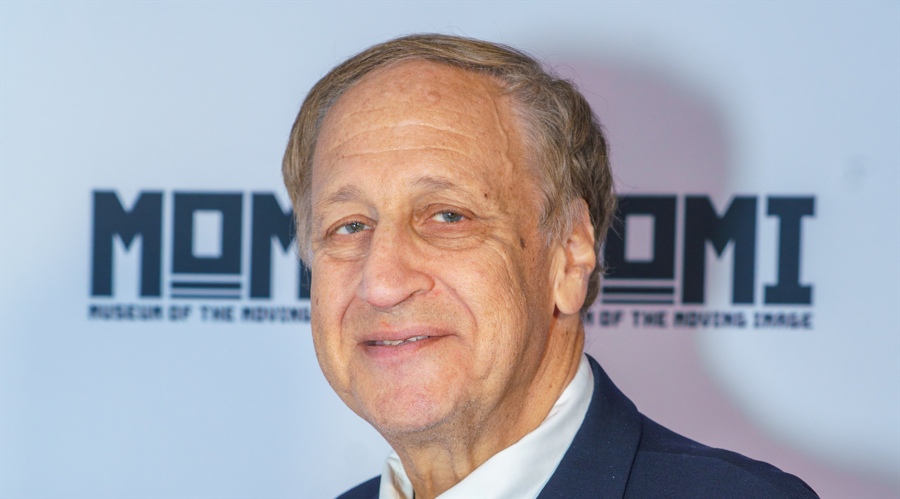
On Saturday, Adam Aron, the chief executive of AMC Entertainment, took to X to pose a pointed question to Robinhood leadership: once a portion of the shares sitting behind the firm's AMC stock tokens is lent to short sellers, are the remaining shares still fully there to back every token in circulation? Aron directed the query at Robinhood CEO Vlad Tenev and Chief Legal Officer Dan Gallagher, both of whom had spent the prior week publicly defending the company's token product.
In the same post, Aron used strong language, describing the overall tokenization approach as something that reduces genuine equity ownership to what he characterized as a "gamified, business-oriented casino." His criticism sits in contrast to Robinhood's own framing, in which each stock token is presented as a debt instrument collateralized on a one-to-one basis by a real share, with periodic dividend adjustments built in but no voting rights conferred to the token holder.
The issuer behind the product is Robinhood Assets (Jersey) Limited, a Channel Islands entity. The tokens currently track more than 190 U.S.-listed equities and exchange-traded funds and are available for purchase in over 120 countries, though U.S. persons are explicitly excluded from buying them.
The Dispute and Its Regulatory Backdrop
The confrontation between the two executives did not begin on Saturday. On September 3, Aron posted on X that Robinhood had listed a tokenized product mirroring AMC shares alongside tokens for more than 190 other companies without the cinema chain's knowledge or approval. He called the practice outrageous and questioned its legality under U.S. securities law, adding that the company had retained outside securities counsel to review the matter.
The following day, Aron escalated by demanding that Robinhood halt trading in the AMC token and stated his intention to bring the issue before the U.S. Securities and Exchange Commission.
Tenev responded briefly, essentially asking what specific concern Aron had. Gallagher, a former SEC commissioner himself, wrote that the company was well aware of U.S. securities regulations and would not cease operations.
The exchange gained further attention at Goldman Sachs' Communacopia conference in San Francisco on Wednesday, where Tenev said he was happy to engage in a public debate and even suggested the two CEOs could resolve their differences in a more personal way. He reiterated that issuing a token tracking a company's stock does not require that company's permission. Three days after that remark, Aron returned to X with the collateral-and-lending question that has now drawn fresh scrutiny.
Regulatory friction around the product is not new. When Robinhood first launched its stock tokens in the European Union in June 2025, the company's own share price hit a record high. Around the same time, OpenAI publicly clarified that tokens bearing its name did not represent equity in the company. The Bank of Lithuania, which serves as Robinhood's lead regulator within the bloc, subsequently asked the firm to explain the structural details of its OpenAI and SpaceX tokens and how those products were described to retail customers. Following that inquiry, the relevant products were removed from the Robinhood app.
Growth of the Tokenized-Equity Market
The questions raised by Aron extend well beyond a single cinema chain. According to CoinShares data cited by Markets Media, the total value of tokenized equities reached approximately $13.4 billion on September 1, a substantial increase from roughly $2.5 billion at the start of the year. Robinhood is one of several platforms that issue such tokens without the consent of the underlying companies, and the firm expanded its lineup significantly on August 13 by adding 100 stock tokens in a single batch.
Since the regulatory questions were raised, the product has evolved. Robinhood Chain went live on July 1, and the tokens can now be posted as collateral within decentralized finance protocols — a development Tenev had outlined as part of a broader strategy back in November. At the same Communacopia session, Tenev told the audience that Robinhood aims to derive roughly half of its total revenue from markets outside the United States within the next decade.
Competing Models and What Traders Should Watch
Robinhood is not the only player building tokenized-equity products from the Channel Islands. Kraken's xStocks are issued by Backed Assets (JE) Limited, also registered in Jersey, and similarly carry no voting rights. By the company's own figures as of Friday, the xStocks program had more than $800 million in backing assets and a user base exceeding 300,000 holders.
On Thursday, Nasdaq announced a $100 million investment into Payward, the parent of Kraken, to distribute tokens of Nasdaq-listed shares. Notably, according to Nasdaq's own statement, those tokens will carry the same voting rights as the underlying shares — a structural difference that distinguishes the model from both Robinhood's and Kraken's existing xStocks offerings.
The SEC weighed in on the broader question back in January. Staff commentary made clear that the format in which a security is packaged does not alter the legal regime that applies to it, and that holders of third-party-issued tokens bear the issuer's own business risk, including the risk of bankruptcy.
Graham Rodford, chief executive of the Archax exchange, told CoinDesk that in his view a tokenized stock ought to represent the actual stock in tokenized form, nothing less. As of Sunday afternoon, Robinhood had not publicly responded to Aron's specific question about whether the collateral pool remains fully intact after share lending to short sellers. For traders and investors in any of these tokenized-equity products, that unanswered question underscores a key risk: the degree to which the underlying asset is genuinely available to back the token at any given moment.